
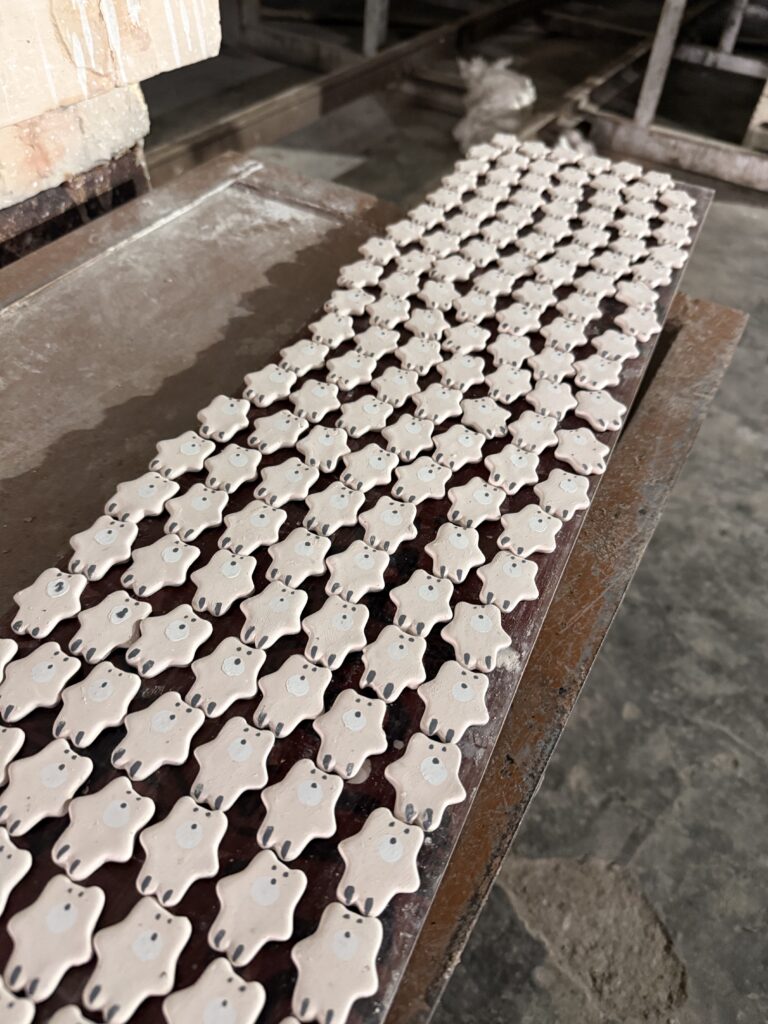
Craftsmanship is more than a skill—it is a philosophy, a way of life, and a testament to human creativity and dedication. In the image above, we witness a quiet yet powerful celebration of this ethos. Rows upon rows of small ceramic figures, each resembling a stylized animal—perhaps a bear—sit patiently on a flat surface, likely in a workshop or drying area. Their uniformity is striking, but even more compelling is the subtle individuality that emerges upon closer inspection. This photo is not just a snapshot of production; it is a portrait of craftsmanship in motion.
🧱 The Foundation: Tradition Meets Technique
Craftsmanship begins with tradition. In places like Khurja, India—renowned for its ceramic artistry—generations have passed down the secrets of clay, glaze, and fire. The figures in the photo are likely molded or hand-shaped using time-honored techniques. The rounded bodies, delicate ears, and painted facial features suggest a blend of hand-finishing and careful design. Each piece reflects a balance between precision and personality, a hallmark of true craftsmanship.
The process starts with raw clay, which must be kneaded and prepared to the right consistency. Molds may be used for basic shapes, but the finishing touches—like smoothing edges, painting eyes, or adjusting posture—are often done by hand. This is where the artisan’s touch becomes visible. No machine can replicate the intuition of a skilled hand that knows when a curve is just right or a detail needs refining.
🎨 Uniformity with Soul
At first glance, the figures seem identical. They are arranged in a grid, suggesting mass production. But this is not soulless factory output. The image reveals a deeper truth: even in repetition, there is artistry. The black accents on the feet and facial features are consistent, yet each figure carries a slightly different expression, a nuance in brushstroke, a variation in glaze texture. This is the paradox of craftsmanship—it thrives in both uniqueness and uniformity.
Such consistency requires discipline. The artisans must maintain the same proportions, colors, and finishes across dozens or hundreds of pieces. This demands not only technical skill but also mental focus and physical endurance. The photo captures this moment of stillness, where the figures rest before firing or packaging, embodying hours of labor and attention.
🔥 The Invisible Labor
What the photo doesn’t show is equally important. Behind these figures lies a world of invisible labor—mixing glazes, maintaining kiln temperatures, cleaning tools, and managing drying times. Craftsmanship is not glamorous; it is often dusty, repetitive, and physically demanding. Yet, it is precisely this labor that gives the final product its value.
Each figure may have passed through multiple hands—one artisan shaping, another painting, a third inspecting. This collaborative effort is a dance of coordination and trust. In small workshops, artisans often work side by side, sharing techniques and stories, building not just products but community.
🌍 Craftsmanship in a Global Context
In today’s fast-paced world, where mass-produced goods dominate markets, craftsmanship offers a counter-narrative. It speaks of patience, authenticity, and cultural heritage. The ceramic figures in the photo could be destined for local markets, boutique stores, or international buyers. Wherever they go, they carry the imprint of their makers.
For brands like Mitti Artist, which aim to blend tradition with modern aesthetics, such craftsmanship is the backbone of identity. These figures are not just decorative items—they are ambassadors of Khurja’s legacy, proof that handmade still matters. In global markets, where consumers increasingly seek ethical and sustainable products, craftsmanship becomes a powerful differentiator.
🧠 The Mindset of a Maker
Craftsmanship is also a mindset. It requires humility—the willingness to learn, to fail, to start over. It demands curiosity—exploring new designs, glazes, and techniques. And above all, it calls for pride—not arrogance, but a quiet confidence in one’s work. The artisans behind these figures may never sign their names on the pieces, but their spirit is etched into every curve and color.
This photo, in its simplicity, honors that mindset. It invites us to pause and appreciate the journey from clay to character. It reminds us that behind every handcrafted item is a story of dedication, skill, and love.
✨ Final Reflections
Craftsmanship is not just about making things—it’s about making meaning. The ceramic figures in the image are more than objects; they are expressions of care, tradition, and artistry. In their silent arrangement, they speak volumes about the people who shaped them, the culture that nurtured them, and the values they represent.
As we admire this photo, let us also honor the hands that made it possible. Let us celebrate the quiet heroes of workshops and studios, whose work may be small in scale but immense in impact. Because in every handcrafted piece, there is a heartbeat—and that is the true beauty of craftsmanship.