
In the world of ceramics, the spotlight often shines on the final product—elegant mugs, intricate jars, or glazed plates. But behind every masterpiece lies a foundational process that rarely gets the attention it deserves: clay grinding. It’s a labor-intensive, skill-driven stage where raw clay is transformed into a workable medium, and it’s where the true craftsmanship begins.
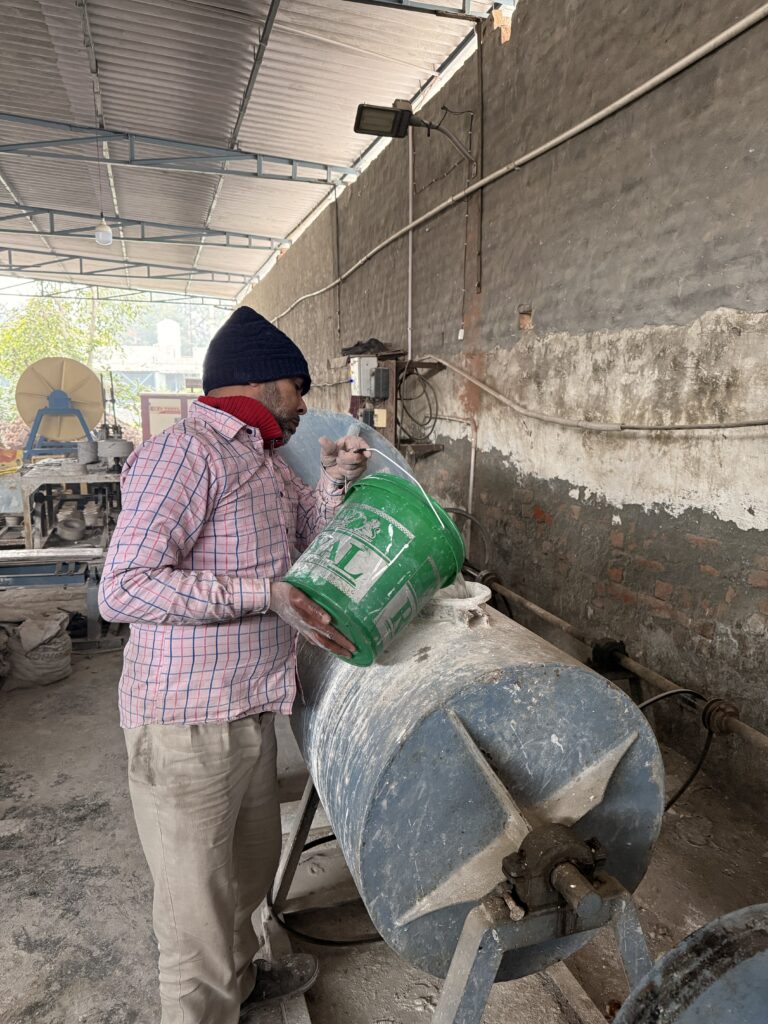
👨🏭 A Day in the Life of a Clay Grinder
Picture a craftsman in a workshop—dust swirling, machines humming, hands steady. He pours chunks of dry clay into a grinding unit, often a jaw crusher or hammer mill, depending on the clay type. For sticky clays like bentonite, special care is needed to avoid clogging. The ground clay is then sieved, sometimes mixed with water, and stored for aging.
This stage demands physical strength, technical knowledge, and patience. The craftsman must monitor moisture levels, adjust grinding speed, and ensure the final powder meets the studio’s standards.
⚙️ Tools of the Trade
- Clay crushers: Break large chunks into manageable pieces
- Ball mills: Grind clay into ultra-fine powder
- Sieves and screens: Separate fine clay from coarse particles
- Moisture meters: Ensure optimal water content for plasticity
Each tool plays a role in refining the clay’s texture and purity, directly impacting the final product’s quality.
🌍 Why It Matters
Grinding isn’t just technical—it’s transformational. The quality of ground clay affects:
- How easily it can be shaped
- How well it holds detail
- The strength and durability after firing
- The way glazes interact with the surface
For brands like Mitti Artist, where every jar and plate carries a story, clay grinding is the first chapter. It’s where the earth is prepared to become art.
💡 Final Thoughts
Clay grinding may be gritty, but it’s where craftsmanship truly begins. It’s the bridge between nature and design, between raw material and refined beauty. So next time you admire a ceramic piece, remember the craftsman who ground the clay—quietly, skillfully, and with purpose.